Words, art, sound by Lou Jns & K Olivier

Originally from the subtropics, Meanjin Australia

Now residing seaside, Lisboa Portugal

One may listen to and buy my music on Bandcamp

One may subscribe to my written musings on Substack

One may watch an assortment of videos on YouTube

One may indulge spiritual violence on Instagram

I love you

  • Março no mar

    from, recent daily entries, Fevereiro & Março. I moved from the city to work and live at a guesthouse in a nearby town.

    ~

    21 I was sun drunk for much of this afternoon after riding thru Caparica. Looking at myself in the mirror I can already see my skin radiating a slightly browned warmth. In rumours of summer I feel a sense of belonging and kindness.
    22 With M we birdwatched, for me, for the first time. I am used presenting the world surrounding to those I am with, so I felt pleased, albeit confronted, for this shift of dynamic. I wish to listen better, I wish to know more.
    I watched Angels Egg, I will dream of white hair.
    24 A ghost smell arrived briefly. These happen rarely.
    26 A woman sits across from me on the metro, wearing headphones, eyes close, head moving to a rhythm I cannot hear but can imagine. She visibly chews on the sound.
    27 I cut my hair to procrastinate packing my house, moving in just days now. My hair falls layered.
    I watched Gasoline Rainbow.
    Notebook fear.

    ~

    01 Starting the day in anxious molasses, I know what must be done to move forward but am eyeing it with suspicion, opting to read instead. My shoulders are tight and painful after carrying too much yesterday.
    I am pre welcomed by those at the guesthouse and already feel a kinship, community. Heart radiates forward.
    Tentative, but there is a comfort here, I know I can settle. I have picked at my fingers all day. I have read and walked.
    I am in the bedroom now, it is dark, but past the window there are trees and birds, this house feels like a place from home. E, my roomate, plays a game on his phone.

    02 I am close to finding the language, whatever that means.
    04 Slow train back home, hungover light, sleep hazing. The ghost of a feeling of needing to do, but knowing I can come back to the house with maybe bread and cheese and thats all for the rest of the day.
    The sky haze, Isa saying it could be the dust from Sahara. I tell her old story from Greece of the desert’s birth, sun carrier & son.
    Got high with E and floating about my room unpacking.
    I will read some then sleep.
    05 Belly full heart full.

    ~

    07 Have been watching again my favourites of 90’s Japanese scifi. Wishing to write a story based on Evangelion. Thoroughly removed from the main plot – some small contained tale where the characters know not why the world has changed in the way it has.
    08 I had dreams
    And woke to sun
    Well rested
    10 I drew the chariot

    ~

    11 I was hiking around Lisboa with my father, we top a hill & see one of three old quarries, like a hot blade cut diagonal thru the earth, like a rendering error.
    Other hikers passed us, so we continue.
    There are two old houses adjacent we look thru, finding food, a sweet made of a nearby flower or weed.
    The other quarries are unassuming.
    or
    In a few other dreams of late I try to light matches who choose to stay unburnt.

    ~

    I have been reading Hummingbird, Salamander by Jeff VanderMeer. I love his other writing, Annihilation and Authority.

    Read more and subscribe to such musings on Substack

  • on, Showers

    I

    In the mornings I shower, rather brief, as I was raised in the tropics. One would often sweat through the night, waking to wet sheets. However, of late, as I reside in southern Europe, this habit comes to question… Albeit, much has encountered such questioning as I face the most trying winter experienced in memory. I find myself reluctant to leave my apartment, lazily eying the cold rain run along cobbles, day passing day, every morning watching the streetlights quiet down, a late reaction to their decisions hours earlier.

    So, I spend all day inside, & I shower each morning, but what am I cleaning? Wetting my hair for comfort, melting away the stiffness through my back and neck, cleansing my mind somewhat.

    Possibly, I am not cleaning…

    In the past when I am drifting thru periods of depression and world ending, I gravitate towards showering regularly, it acting as a period of time I need not concern myself with anything more than the body. I remove myself from a collective temporal flow, a challenge to do, especially in folds of the city planet.

    When else do I feel this ease to resign myself? To let be? I suppose, to a degree, when I am ill. Although, even though I know I should let myself be, the fact that I cannot function “normally” (ie, productive) causes me distress, often leaving me spiralling in an already tender state.

    Hm…

    II a

    I am currently staying with my uncle on his farm in the Alentejo, central Portugal. It remains to be wet, cold, dark; but when I look out the window, I am enveloped by country, open space, world. As well, I see a surreal assortment of strange sculptures made of scrap metal. Monuments of creativity living within the natural, a coexistence. Recently, he was robbed and erected sentinels to ward off invaders.

    I took the bus here from Lisboa Oriente, the route involves the crossing of Ponte Vasco de Gama, the second longest bridge in Europe. I have been listening to Volcano Choir again. The bleak sky while crossing over, the land immediate to the river, a wave washed over me – I feel it is evening at the airport waiting to board. In having such a strict schedule of transit to adhere to, I am able to remove myself from the normal flow of time, but now with community, of sorts… I do not know these people, I do not speak with these people, yet, together, we are forgiven of straying from any typical routine. Relinquished of momentum.

    Time, and expectation thereof, is eased.

    Aside,

    Something else presented itself – the last time I traversed this route, returning to the city, a mounting wind stirred in my chest. The season turns, I thought, excitement building for my first time living thru such cold, the clouds, the coats, the draw inwards. I’ve not yet read the book but its name came to mind, “If not winter”. I could feel tears surfacing, but the city was near, my lake was frozen over.

    Found the morning after a storm

    II b

    I write as it pisses rain outside, welcoming the routine. Even after one day my heart eases, as, while my actions remain largely unchanged (I wake, eat, coffee, return, rest… with something else surely taking place at times) the lack of external pressure from an ever present society makes itself known. My mind falling on the streetlights asserting their message, “Here is night. Here is day.”, imbuing time with a necessity. Such absence stands tall, time moves without arbitrary markers.

    Despite efforts to decentre productivity from my day to day, it arrives quickly, with grace – creativity lives here, in natural time. However, I suppose these systems of time we are taught of (or, forced into), may be subverted, or adhered to, in city or country. (ie, I stand outside time by showering, albeit, out of a habitual desperation)

    But I ask, how might I sustain myself living outside time? As whenever I experience such, that ratty voice to my right will mutter “But how will you make a living? This isn’t real life! You are a child, grow up.”

    A feeling of dread wastes me. An old, quiet, dread. I ready myself to return.

    This grief is familiar.

    III

    I was not shown many examples of people viably living in such a way. (here, there are ties being made between this focus on time, and a more general ‘alternative life’)

    A first was “Into the Wild” when I was nineteen, this story ending with the avoidable death of our friend Alexander. But even so, after watching the film I was wide eyed inspired, turning to my dad and saying, “I want to do that”

    This idea is always treated as naive, idealistic.

    A week later I drove some hours north and lived out my car for half a week, bringing with me a few grams of weed and two tabs of acid. On my third day, lightning sounded overhead soon after coming up, relegating me to the interior of my 2001 Hyundai Elantra. However, as it is the tropics, storms pass quickly; and as I was trying to regain some semblance of internal stability an older hippie bloke pulls up in his van with two hounds – a confidant, a guide. We talked and he brought me thru the rest of the day, I played him a song on guitar. Afterwards I would struggle to come down, a sense of disillusionment haunted me, a struggle to connect with routines imposed apon me. Perhaps I saw a better way of living and didn’t want to return, especially to suburbs.

    But I only had these two reference points, one dead, and one deemed homeless. They were merely characters.

    IIII

    How is this ending? I want to flail.

    Oh woe is me, woe is us.

    I feel an aversion to finishing with a grand call to action (Here are three things YOU CAN DO), nor do I feel able to… Instead, this is a slow personal change for now – ongoing, unsolved, learning, unlearning.

    Recently I reached a breaking point similar to my coming out, allowing myself to be dissatisfied with how things are – saying “there is change that needs to happen. So, I read books, I fall in love, I let much of my usual life be challenged, asking “is this what I want?”

    Even here, these words, many ends present themselves, but listening to the divining rod I finally found myself walking in a direction that felt wholly right, this is what I want to write.

    I don’t know how the answer ahead of time, but today I watched my uncle clean the fireplace, I ate small bites of 85% cacao, I stood outside with freezing hands holding a zoom H1 portable recorder capturing the sound of pans and old metal he has hung above the garden bed – metal windchimes.

    Of course, then, the sun came out.

    ,,,

    One may also find & subscribe to such writing on Substack

  • Pacific Circle, the Circle Closes

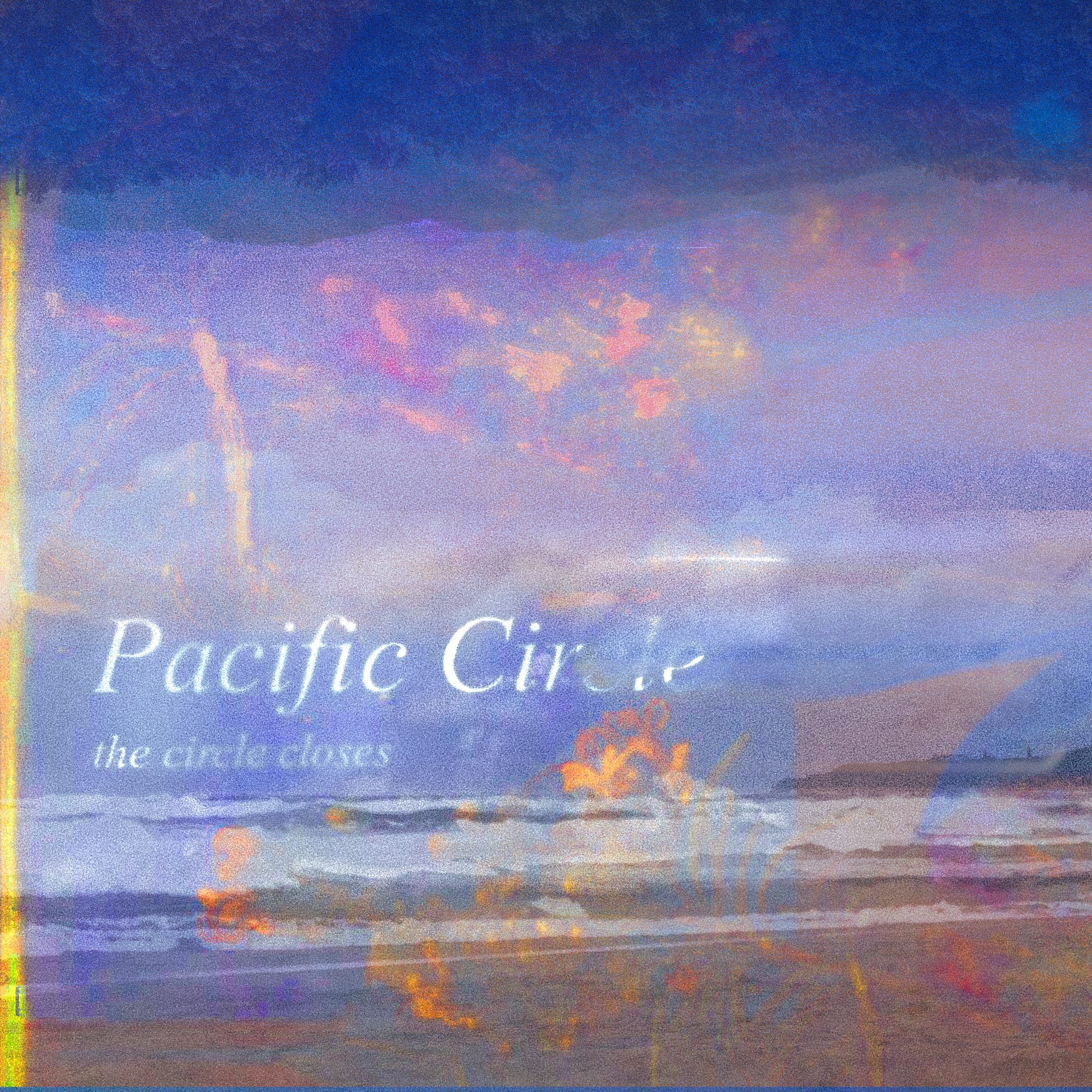
    Dearest, the past years have shown me such love and beauty, and the only appropriate response, I felt, was song. So, here are fourteen, spanning from earliest 2019 to latest 24, all together titled as “Pacific Circle, the Circle Closes”…

    Many of these songs have wanted to see daylight for some time, and I am so grateful to finally fulfil their wishes, although perhaps not quite as they imagined, as this ‘album’ treads apon the territory of portfolio or compilation, pulling the brightest lights from many different projects throughout the years. Yet, in this excited, callous action, perhaps an originally unintended narrative is brought to…

    I love you

    Pacific Circle, the Circle Closes by K. Olivier

  • Lisboa Eye

    Friend, I have made ways apon the docklands, dry Santa Apolónia. Eyes to ocean, out the window obstructed, landbridge over trainlines, catching myself gripping the table. I am bringing the pen down with shooting pains up my arm. I am not grieving, even thru deathrites. I am only the blood of blood, pulled across worlds. Mind runner, hot flashes strike me, rifling thru pages ever quicker.

    I wake with the fear.  

    At least I can speak of discarding the world eater, emptying the container into a toilet bowl; at least I left the apartment today. Yet, I never remember being so deeply buried whenever I find myself underground, always feeling I’ve not seen such depth before. The first encounter with primevil.

    //~//~//~// 

    Both of my father’s parents passed over the month. She was first, on the new moon. & He, two weeks later apon the fullbright. I’ve never known them closely, but was ever grateful to have already been living in Portugal as it happened, taking short journeys to the south as we set them ablaze. Nonetheless, I feel displaced, confronted by the great loss in unfamiliar land, a world apart from my tropic deities.

    So, the week moves on & I look for guidance in the cobble, I look out to an unfamiliar ocean. Unsure how to move but slowly I shift, sometimes catching
    glance of myself, seeing the fear as its own entity, resin coating the corners of my belly, emitting vapours throughout, depriving me of air. 

    But I see it.

    I love you.

  • mmovements

    25 02 09

    dearest, 

    I am leaving my country within weeks, to half the earth away & I swear I will write you as I walk thru Spain, write in Portugal, & grow roots for foreseeable futures in my ancestry Netherland.

    Before I depart Ive been dredging up all kinds of sounds and scratches over the past year, music from 19 to this warm 25, music of this space, of this world I’ve created for myself within the salt and hills and subtropics.

    Before I depart I am bringing these songs to light, many differing tales and lores under one roof.

    Before I depart I will refer to thee as

    see pictured… pacific circle,,, the circle closes

    I love you

    25 03 19

    dearest ,

     Europe has been cold, wet. I am filled with a new fear but I will persist.

    My songs are ready, awaiting initiative I know I have. 

    the Pacific Circle sits so far away now, I am left staring at the North Atlantic, places of a new home.

    I will start walking north, from Sevilla to Santiago de Compostela, I will stay in contact as best I can, finding ways to write to you from the means available to me. Ive only a few more days with my computer before leaving with only a backpack, notebooks, camera, accursed telephone of whom I shall need reliance apon but will manage will manage.

    in the next few days I will show my songs to some parts of the world. I wish to start my new life with musical momentum, using this Circle as a grand show of styles and evolution over my melodramatic career . I will share more, I will write more, I will sing with others, for new lovers.

    Ive never been one for a grand launch of an album, or project. I feel this will be the same: it is shown the light of the greater world and slowly shared, slowly explored. 

    but I am timid here, this shit makes me nervous.

    I love you.

    Listen out for the pacific…

  • ARROW, THROWER

    & these words, these sounds, coming tragically late to this space on the internet I’ve so carefully carved out for myself. meaning, I released two songs over in August, & never got around to putting them up on this website & I dont know exactly why… But here I am here with the relevant motivation and energy to push this forward

    So I announce, 

    Arrow, Thrower

    &

    Thrower, pt 2

            “two Songs of the greater project “Saints, Throughgrain” depicting self in differing lenses, or, I talk to myself too much… 

    streaming link

    bandcamp link

    Credits

    Lou Jns as writer, performer, recorder
    Rachel Land as editor
    Julia R Anderson as drummer, photog, ears
    Erik Williamson as ears
    Marly Lüske as mastering engineer at Alchemix Studios

    Samples

    The B Section of Inner Urge (feat. Sam Gendel, Jacob Mann, Christian Euman, Brian Green & Adam Ratner) by Sam Wilkes
    ANNIE, I SING FOR.. (LIVE) by Saya Grey
    Turtles by Flying Lotus
    The Angel by Buffy Saint-Marie 

    excess thought… disregard…

    I feel like more should be said, or done, the ever pressing feeling of ‘oh i should work on this fucking website more’ which i really wish I was doing but on the other hand this has been a difficult year, but what year isnt, & is it really even appropriate or worthwile to put these thoughts out here for eyes, as opposed to the journals I have been obsessively filling . 

    but now I am reaching a plateau of sorts, it feels, but one that doesnt involve me being on a computer all that often, working towards big life changes working thru health & bettering the body. but oh so missing this feeling of proper focus and drive and work towards this music and art world I am creating, or,,, i might just be getting in my head about all of this. I have been writing songs on the guitar very well lately, I am working on two more short stories, I have been drawing, I am looking towards more study, I am giving this beast sobriety my all, or as much as i can give it. I have been taking photos, more of the people around me who I love. I have been making my own notebooks, I have been handling leather…

    But my tape machines eye me, & I know i want to, need to record soon. something needs to happen. i dont know what

    there is more i need to say but this fleeting motivation is wearing thin, soon to begone.

    hmm

  • Awaiting the Third Moon

    By the light of recent moons I have scrawled words, I have spoken & sung, I have bled the new blood. By this light I have written songs soon to surface. But for now I write stories…

    Written by Lou Jns 

    Edited by Rachel Land

  • cornercorner; wakeup newmoth

    falling to
    sound thinking small rain
    atop your
    large frons, soaking somesun
    hidden, prior today.


    I feel weak,
    am I doing wrong?


    Wakeup, newmoth
    fell asleep sometime in the belly of last year
    but now theres hints
    of that coolwind, coming back clear


    early morning a moth lay above my head
    the sharp light chilled me
    for a first time,.
    old Thrower, the Coyot’s dead.


    I should wait before my cards again,
    give time to the season,
    let the new world ring effect,
    let the new world take its steps.

    (dadf#ga)

    “i think this would fit into wraparound chronology but not overly nicely, atleast currently. its a bridgegap, there is more to be said and more sound.”

    more,, as in, , encouraging myself to more thoroughly build this world of my own. 

    there is so much to be spoken. it pains me.

    to build almost a database, or lists and webs of information and story.

           its on the tip of my mind and it will come. I will bring this music and world derived of poem and sound into fruition for you i love you.

  • hm

    heres been this rotting ginsberg in the small lines running my skull

    like, oil slick left trails of its own neural pathways.

    something of antiquity been broken & Im sober

    & broiling over leaking through wiht a moving portrait of sorts…

    Theres code here and we can just almost see it

    I know this doesnt mean much

    but parts are moving closer

    the lines within me are not just scarring ,but smoothing over heal.

    I didnt just find these cables somewhere pointless, they have a place and time

    there is more to be said, there is always more…

  • the Driver & Somesun

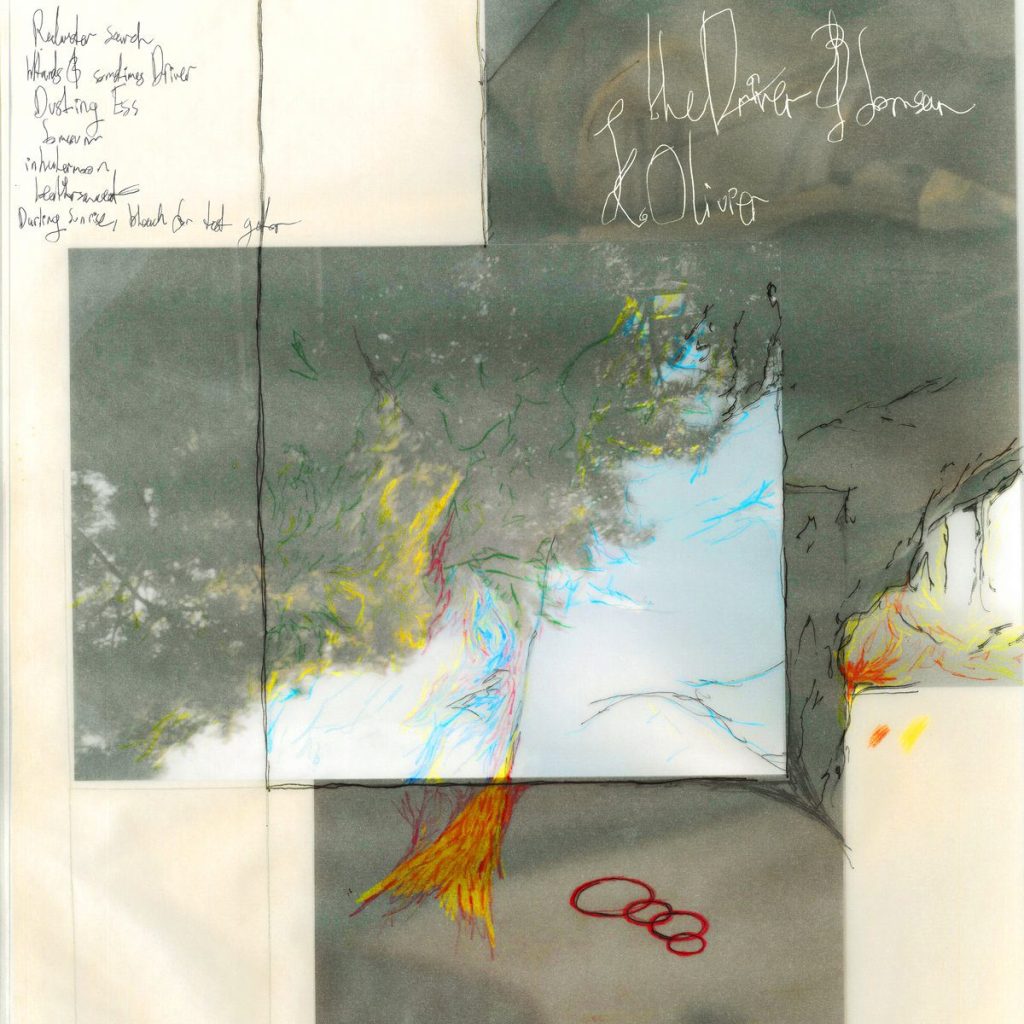
    All, a debut of mine is now released, titled “the Driver & Somesun”, by K. Olivier… an expression of… queer loves and, something large, greater (like, an earth and warm rock rises up to towers or buildings, something dubbed a Wraparound),,, Like, the citrus moon speaks to you…

    or, the Name “K. Olivier” brings with it a method of narrative where I hope to finalise many archived and ongoing projects, building apon and leading up to characters such as the Driver & related aggregates.

    the Driver & Somesun, the album itself, can be found on bandcamp and all your usual steaming (yet not itunes/apple due to reasons unbeknownst to me…), thank you for your time.

    Bandcamp

    streaming…

    ~~~~~~~////Under the name K. Olivier, the first of a long winding string of larger musical projects will release as the Driver & Somesun; detailing warm stories of queer love and actualisation atop warped cityscape; musically punctuated by samples, electronics, & frenetic percussion. 

    The album covers ground of folk & alternative to maximalist experimentation with strong narrative weavings throughout; this is written in & approaching a summer “22” demanding hot air and early sunrise where a Wraparound can be heard someplace between here and a burnett river some hours north. (such a place is often covered with dry bushland to rainforest lined by a pacific coast and hinterlands); //-//-//-//-//; the Driver found his way through, or was birthed of, such Wraparound, but a name and face changed manytimes; earlier know to be name’d Commer (I think), often seen with likes of Augustine, Harper, Rose Alexander… (some of which names were given to me kindly by very close friend and collaborator Tess King, nice enough to lend their voice to this here project;; alongside one most beautiful Julia “JRA” Renee Anderson who leant me their percussion and drummerbrain on some fifth song). 

     Driver, faye, allohe lean to be temporary suggestions of space: “I know they might not return, but they will always be here; as in anything from hours to years terrain might have shifted and disregarded legacy, but these certain points hold true; as in point touching paper together, there is some connection to the past and what’s to come.” 

     Sharing music is an act of love, Or so I’ve been told.

  • dustingess of driver/somesun

    This song, Dusting Ess, is the single from my album the Driver & Somesun which will be released as K. Olivier on Colesbrough Mort & Records two weeks today… November 1st 2023.

    thank You.

  • sSomething found apon Redwater search,

    Dears,,, “sSomething… Redwater search” brings the Driver to focus, seven songs to be released two months today as, “the Driver & Somesun”, the first more narrative focused project of mine under the name, K. Olivier. rumors of Sound & Performance persist. I will speak more.

    ; writes…

         a five hour stretch of Drive between two rivers holds a vague echo of nothing more than a few ms. Names spoken within I can see (& to a degree, detail) renditions of which will be later revealed to both you dear reader, and myself. now I share of the Driver, found in depths of Redwater somewhere off the coast in such aforementioned region known as the Wraparound.

    spt1st2023- in Two months a year ago such monument named Driver was dredged up from depths of Redwater, and in the months followed made himself love and queer family of soon to be Faye or Alloway or Allohe… I saw them! through and under moonlight in trans bodies there was lust and power only to be found in the “blistering heat” of summer. this City resides around the edge of cruel Wraparound, and from a certain angle I can see the space between, like if one was to peer apart the two surfaces of a page. 

         Aside, the first place found such anomaly was in my dear Bardon, where I once was a visitor I now live; I can see the Wraparound on all sides of me from the morning to evening, she whispers to me of so much more than I ever thought, a Driver a Coyo’t, weak Thrower and finally reasons and arcs for such dear Augustine (ofWHOM I HAVE NOT FORGOTTEN!) but that is besides the point. I will write soon, and once I do something will change, I know it. 

     L or now, 

    K “

  • 23

    Its been a while ~    &

    Soon telling words of the Driver,

    , knowing Commer, knowing a Moonsong;

    Words of K olivier

    told apon cruel Wraparound.


    //~//~//~//~//

    wishing movements were faster but a brain is molasses .

    Narratives and experimental sounds permeate warped landscapes & warm skins. an ego or presence to place thoughts and legacies apon, K. Olivier does become a life of its own through the likes of words and breath and ink and electronics, and strings. Sharing art is an act of love I think.

    or,,

    A name is not dead, just moved; especially forever.

    (as in, there is something such as a second rough interlude which will at some point surface dont quote me on that.)

  • 220622

  • Fireball atop Mount Eerie

    This video was a second assessment for a writing course of mine, of which I briefly mentioned in my last entry, of which there lies another work – a writing titled Spidergarden – of which my intentions lie firmly on publishing within the coming months.

    For now, Fireball atop Mount Eerie

     ~ ~ ~  ~ ~ ~  ~ ~ ~  ~ ~ ~  ~ ~ ~  ~ ~ ~  ~ ~ ~  ~ ~ ~  ~ ~ ~  ~ ~ ~  ~ ~ ~  ~ ~ ~  ~ ~ ~  ~ ~ ~  ~ ~ ~

            Fireball atop Mount Eerie, an audiovisual interpretation of “II. Solar System” by the Microphones. Repurposed audio and abstract visuals stitched together into barely coherent vignettes depicting three stages of the story Phil tells through this song.

    A huge thank you goes out to my friend Tess King, who walked me through the visual effects she used on her video The Storm and The Sky, which I then adapted to my own material.

     ~ ~ ~  ~ ~ ~  ~ ~ ~  ~ ~ ~  ~ ~ ~  ~ ~ ~  ~ ~ ~  ~ ~ ~  ~ ~ ~  ~ ~ ~  ~ ~ ~  ~ ~ ~  ~ ~ ~  ~ ~ ~  ~ ~ ~

    Further writings, notes for a class

    II. Solar System is a song from the 2003 album Mount Eerie by alternative experimental folk rocker: Phil Elvrum as The Microphones. This song, and the album as a whole, deals with highly existential and introspective themes through a theatrical storyline following the narrator on their journey up a mountain where they die and later observe their own body and the environment it dwells in.

    In this track in particular, Phil wallows in nature and gravitational metaphor depicting his inadequacy and awe when approaching this mountain, with the chorus acknowledging him as something temporary, something that will pass with time. This chorus, and especially the line “Blow over me solar wind” was huge inspiration for my film; the grainy and distorted visual style was one I had in mind far before any filming, as it promotes the idea of everything, even something as immovable as a mountain, washing away to dust. (see Visual Manipulation)

    But not everything is decay, as instead of solely depicting this story as one of reduction I brought in ideas of movement and progression. In act one, the death of Mount Eerie is framed against a day passing: the Sun, or fireball, dawns, peaks, and sets as the mountain’s life reaches it’s end. There will be another day, another happening; as in the grander story of Mount Eerie, Phil’s death is not the end. Act two is a transitory stage of much more obvious movement and change. Inspired by the surreal and mystifying dream sequences of the classic anime, Neon Genesis Evangelion, often used to depict internal conflict or introspection, I made this scene to be abstract enough that the source image was unrecognisable, leaving the colour palette to do the heavy lifting. The sickly grey and purple migrate into warm forest underpinned by constant motion – nothing is permanent but new life will always find a way.

    Later in the song, Phil reminisces on the memory of “a beautiful girl skilfully juggling a soccer ball on a sunny April Sunday afternoon in Tanto Gardens Park in Stockholm, Sweden” (from Headwaters), drawing this image into the storm of his own story, during which he repeatedly mumbles “I know you’re out there” to the girl and the greater universe. Early on I decided this to be the third and final scene of the film, but was unsure how to portray it, eventually opting for a less literal depiction of a faraway thing coming into focus orchestrated with the abstract beginnings of the Mount Eerie record and my own low grumblings echoing to darkness.

    The music and sound play a prominent role to help move the story forward in this film; it makes clear reference to the original album (often times sampling from it) while also deliberately setting itself apart at times, being something new. The mountainous howling wind of the first act climaxes into the delicately unstable reed organ of act two – the audio and visuals are one cohesive piece of media, not a video for a song or a soundtrack for a film. 

      ~ ~ ~  ~ ~ ~  ~ ~ ~  ~ ~ ~  ~ ~ ~  ~ ~ ~  ~ ~ ~  ~ ~ ~  ~ ~ ~  ~ ~ ~  ~ ~ ~  ~ ~ ~  ~ ~ ~  ~ ~ ~  ~ ~ ~

    Visual Manipulation – Before production, my friend Tess King walked me through the visual effects she used on her video The Storm and The Sky, which I then adapted to my own material.

    Headwaters – Some time in 2003, after the release of Mount Eerie, Phil started distributing a self-made book titled Headwaters, which provides insights and background to the album’s story and production. 

  • Capstone

    I recently did a performance for my capstone class in my music technology degree using this pure data platform I’ve been coding recently. I performed with a few peers from my cohort and captured it on video, overall was a really fun night. The gig was hosted by Superordinary, a fantastic art space in the Brisbane CBD, and Toby from Trail Mix helped with all the organisation.

    Heres the video…

    Additionally, for this course I did up a video going over the systems and processes i used to make this show happen, if your interested in some nerdy techy shit then feel free to check this video out…

    Ill be continuing this project over the coming months, as I intend to partake in a project study for my degree and look into writing a body of work using this software.

    Anyway, hope yall are doing well!

    Peace n love,

    Lou

  • Pure data improv platform

    Hey all

    I recently posted a video showcasing some coding ive been getting up to: a multifx processor built up in the open source coding environment pure data. I intend for it to be used for both live performance and studio composition. I started on this path for one of my uni courses, and intend to continue with it further next year for a project study, and hopefully into the future after that.

    Here is the youtube description which discusses a bit of the process and thought behind the coding and this specific improv:

    “This is a modular sound processor akin to lloopp/ppooll i coded in pure data, it is still in its very early stages. The only sound generator is a clean, di electric guitar, everything else is pd. Much inspiration is taken from fennesz with his use of lloopp, although i hope to expand upon this due to the capabilities that come with coding the software from the ground up, as i find lloopp fairly obtuse and difficult to use. This session is fairly directionless, i was mainly having fun with some new modules i made which allow me to explore this incredibly gritty and distorted sound world; i plan on posting more demos as time goes on with other textures this software can make. 

    Also, i will release this all into the open once its in a bit more of a palatable state.”

    Here is the video…

    Hope yall are doing well.

    Peace & love,

    Lou

  • Distortion & Noise

    Ok, so here lies most of my knowledge regarding music production. I cant say that I’m amazing with EQs, compressors, delays, or reverbs, but I know distortion. In this post I’ll go over various techniques and methods I’ve developed over the past few years for really interesting and unique distortion.

    Pre-Production & Recording

    First of all, lets start with guitar. This is such a versatile instrument for distortion, but probably one of the more common ones. Even so, theres so much you can do here.

    Depending on what I’m going for, I’ll either run my guitar through my pedal board (and possibly an amp/amp sim), or right into my apollo twin without any effects beforehand. As I mentioned in an earlier post, I have a guyatone distortion chorus pedal, which I usually then run into a boss DS1. I find this is a great combo for messy, in-your-face, overwhelming distortion. If I’m really going for chaos I’ll use a phaser in-between the two distortion pedals, and possibly a PS6 pitch shifter before the whole chain (with the mix on low, either up or down an octave). When put through my behringer tube amp pedal this chain can sound monstrous. I can’t remember exactly but I’m fairly certain this is the combo I used for my tune ‘The sun’.

    Moving away from traditional guitar distortion, Ive been recently running my guitar through just a tube preamp for a fuzzy and electric sound. I love the uad v76 preamp for this. This results in a much more direct and controlled sound, great for ballsy rock n roll. Downsides of this is that it can be a bit dry, so I like to pair it with some subtle early reflections (and of course, a tape simulator)

    Its worth noting that I’m doing this with a les paul style guitar, which I find works amazingly with all kinds of distortion. Whenever I’ve messed around with a fender, I always find that the distortion is way to harsh and bright, whereas the bass of the les paul helps fatten up this mayhem. With the tube preamp distortion, this is easily noticeable. The low end of the guitar is the first to distort and crushes the high end, and because the preamp is adding so much harsh and fizzy high end already, it sounds full and balanced. I’ll generally use the rhythm pickup to achieve this, although if I’m going for a bright lead sound I might use the treble pickup.

    Aside from these effects/signal chains, there are a few other things I like to do. Mainly, as I am generally not recording with a real amp, I will route my final signal out to my shitty little practice amp and crank it up loud to get feedback with my guitar. Its a really cool sound and, especially for lead guitar, gets me in the zone, resulting in a really dynamic and much more lively performance.

    While I used guitar for these examples, you can easily apply this to whatever instruments your dealing with. I’ve used these processes before on vocals, keys, synths, and just random noise to create fucked crazy sounds. Experimentation is key, there are no hard and fast rules.

    Post-Production

    Past the recording stage, there are many cool methods of further emphasizing an already distorted sound, or distorting a clean sound to create something new.

    One specific effect which I live off (and not just with distortion) is the waves abbey road ADT plugin, which allows me to create one or two extra voices/takes for any given sound. Really handy for vocals where you have a great take and don’t want to sing another take perfectly in time with the first, but also with distortion. On The sun, I used this on the main distorted guitar sound. Initially it was just a mono recording, which felt much to forward and direct, so the ADT plugin spread it out and allowed it to take up the sides of the stereo spectrum, rather than the middle. It also complimented the overwhelming wall-of-sound effect I was going for with the initial recording. This effect softens sounds, while keeping the intent intact.

    Another fun technique I use a lot is having a room distortion send. Ill send the dry signal to a aux channel, with a room reverb on it. I quite like the waves abbey road chambers, but I’ve also had great success with valhalla room. You just want the reverb short, long tails will muddy up the sound really easily, and you dont want to cut out the bass, as that will allow the distortion to really come through (similar to the les paul rhythm pickup stuff i was talking about earlier) After this I’ll use a over the top distortion, my favorite being uad raw (a really nice emulation of the rat distortion pedal). The sound this combo creates is magnificent. Its boomy and totally overwhelming. Just blending it in a little with an already distorted sound can work wonders (again, see ‘The sun’), and if you use it an inserts on a clean sound it can totally transform the source. This sounds fantastic on vocals, once or twice I’ve taken a backing vocal take, autotuned it to hell, then done this process and I get this totally alien really agressive backing to the main vocal take.

    Again, experiment with these wacky creative effects, its the best way to find really cool sounds. Time based effects before distortion and/or heavy limiting can result in amazing textures, and ungodly artefacting. Pitch shifting is also fun. I love the kilohearts pitch shifter, a really simple granular pitch shifter (which adds subtle time delays due to the nature of granulasation) that pairs great with any type of distortion.

    Mixing

    While it is always fun to make all these fucked distorted sounds, you’ll eventually have to mix them and make them fit into a cohesive piece of music, so I just wanted to go over a few ways of helping this happen. Some of this is pretty basic mixing workflows and processing, but it still applies to noisy and rude sounds like these.

    First is just to be really brutal with your eq. Sure, a sound can be awesome in isolation; taking up the whole frequency spectrum and overwhelming everything else. But you do need space for other instruments, so using an eq to carve out space for the other elements is quite important. And you’d be surprised at how much you can take away from a distorted (or any) instrument and not really notice the change. If you have vocals, around 1-3k depending on the vocalist is a good area to dip out to allow for more legibility, and as nice as it can sound, you dont always need to keep the bass frequencies in a distorted sound. It generally gets really muddy, and what I like to do to control this area a bit more is use a high pass with a really gentle slope. Too sharp a slope and the cut becomes really obvious, so really soft and gentle slopes sound really musical and are much harder to notice. For gentleness I really like waves’ REQ.

    However, if eq isn’t cutting it, and there are annoying frequencies which obscure other sounds or are just too shrill, this next method could really help. In a few cases I have used more distortion to help mask other distortion/unpleasantness. I find amp sim plugins work the best for this, as they really change/shape the sound in question, but I’ve also had luck with some more subtle distortion & saturation. If your high end is causing issues, cutting some of it out, and then distorting again can work wonders, as you dont feel like youve lost high end, but its much more controlled and listenable.

    Finally, the waves ADT/stereoizer way of ‘softening’ distorted sounds works really well, but if you want something a bit more subtle, some early reflections can work amazingly. I’m partial to the UAD precision reflection engine, it results in amazingly versatile early reflections, allowing you to really push sounds back if needed. But if you dont have uad, then any reverb which allows you to just use early reflections can work great. I’ve had good results with valhalla room, and tons of the algorithmic waves reverbs. You just need to learn how to use them and manipulate them to get the sounds your wanting.

    Final thoughts

    Anyway, thats all that I have for now. I’m planning on collating other more niche effects and processes and writing them up at some point. I hope some of yall found this interesting, distortion is an amazingly fun effect, incredibly versatile. I find it sometime gets a bad reputation because ew dirty sounds are gross we need clean clinical sounds for our modern music, but theres so much you can do with distortion without it being this wall of noise, you just need to learn to control and tame your effects. And i suppose that also applies to pretty much all effects in music, practice makes perfect. Learn what you have before buying something new.

    Peace & love,

    Lou

  • Visual songwriting pt 2

    So this is a followup post to the first visual songwriting post I did a few weeks ago. I dont see this post being as extensive as the first, as its more of a short retrospective of how this songwriting method panned out.

    In the past few weeks, I’ve recorded most of the elements of the song(s). There’s a few things that I still want to touch up: I want to do some more atmospheric & sound design-y stuff, plus redo some of the vocals, but for the most part the ‘songwriting’ and is finished.

    The main benefit I found was when I was playing parts in, I would have this sheet on full display, allowing me to really visualize the intensity and structure of the song while recording. On shorter parts this didnt change much, but for a part such as the main guitar, which plays for about 10 minutes of the whole 15~ minutes, I loved having this visual aid ready and available.

    It was also very interesting drawing in the intensity and movement of a piece before actually working on the music itself. Got me into a quite a different headspace even before I picked up my guitar.

    For such a maximalist instrumentation, I found it incredibly useful to have a rough outline of what goes where before recording (especially considering I only have 14 tracks to work with). I went through a few revisions of the tracklist sheet, and consolidated it to a smaller & more manageable single A4 paper. While the original tracklist sheet on the backside of the timeline was a fun thought, it just got confusing. I had trouble actually locating what instrument was where.

    I’ve attached the final for your viewing pleasures:

    After bouncing everything to digital when i finished the main instrumentation, I started re-recording over various tracks, such as the big DRONE track (14/15). I was able to do some cool effects, which included essentially ‘resampling’ the bass and screw guitar tracks through tons of effects onto these two channels. I’m planning on doing this more with other tracks, such as the xix drums, and probable some of the vocals as well. Doing this stuff on tape is a bit more exciting than just in digital, as there are so many more ways for stuff to go wrong, which always results in fun sounds.

    Also, for any of yall who work with a 16 track and are in need of a similar sheet, heres the clean scanned version of it. I’ve already started using it with various other tunes, its quite helpful.

    Overall, I’ve changed up a good few things from the original plan. Some sections I shortened, I’ve added & changed instrumentation. Although its still very similar to the plan, and to a degree I totally expected this to happen. Its hard to know exactly what something will sound like until you actually hear it. I also have plans to possible change the length of some of the middle section, as after consultation with a friend it appears to be a bit too long. I’ll see what I do tho, Ive always been fond of lengthy and intense builds of sound. If I can make it work I will try my hardest to do so.

    Unfortunatley, I dont currently have the song to share. Its still in a messy state, and I really want to polish it up more before it goes out into the world.

    In general, I found this planning method quite helpful, im for sure going to try it again in the future. I hope yall got something out of this

  • Lofi music in the digital age

    I recently wrote a paper for a university assignment regarding the current state of lofi music, specifically surrounding digital recording. I thought I might as well share it here. The references used are still included, as while some of them were there just to satisfy the assessment requirements, some I found incredibly interesting. Specifically, Adam Harper’s thesis “Lo-Fi aesthetics in popular music discourse”. While I didn’t manage to make it through the whole paper, it was clear it had a wealth of information on lofi/diy music, a genre which doesn’t seem to be the focus of much academic writing.

    This paper is written in a fairly academic way, I would have preferred to write in a bit more normal and straightforward manor but alas, this is what I had to do for my assignment. I really didn’t want to go through the whole paper and re-write it in my own style so I’ve left it, for the most part, as is. Although, I have added various comments (in italics) and also more fully fledged sections that weren’t in the original

    Introduction to this writing & lofi aesthetics

    In our current age of digital recording, perfection has become the norm. With the capabilities for unlimited multitracking, and a breadth of effects and processors, musicians are able to easily create maximalist instrumentations where every detail can be fine-tuned and finessed. However, the anomaly of low-fidelity music (more commonly known as lofi) intrigues me, as it could be considered a rebellion against the highly refined mainstream. Presently, ‘digital music’ suggests a perfect, quantised sound, which lofi stands in stark opposition to. But the digital domain isn’t only limited to these clean characteristics it is reputed for. Digital music has many of its own lofi aspects, and although it is not as well-known as a lofi medium, digital lofi artists can be closely compared to those who operate in the analogue domain. Throughout this paper I will look at the various forms of lofi, both in the analogue and digital domain, and how the lofi from the 90’s and earlier has evolved in novel ways, yet retains ties with its predecessor.

    What is generally defined as lofi has changed over time, not only in terms of sonic characteristics, but cultural position. As Harper states, “At its most crudely sketched, lofi was primitivist and realist in the 1980’s, postmodernist in the 1990’s, and anarchist in the 2000’s” (Harper 2014, 5) Additionally, the term ‘lofi’ wasn’t even used in regards to a genre or style of music until the late 80’s, with the first appearances being on the WFMU radio station where it was described as “home recordings produced on inexpensive equipment. Technical primitivism coupled with brilliance” (WMFU 1986)

    Despite the proper terminology only appearing more recently, there are many examples of lofi music made and released through the 60’s and 70’s. A prime example is J.W. Farquhar’s 1973 album The Formal Female, which has been credited as an inspiration for many lofi artists. The starkly lofi recording quality of this album was not necessarily desired. During the recording process Farquhar would soundproof his apartment to remove background noise of “sirens, buses, and gunshots” (Farquhar 2007). Clearly Farquhar did not intend for this album to be lo-fi, but made do with the limited equipment that he had. However, 20 years later the crude aesthetic and sonic qualities of this album became coveted by aspiring artists such as Guided by Voices, Sebadoh, and Beck. Looking even further forward to the past 10 years, Farquhar’s raw and simplistic guitar, primitive drum machine, and poorly recorded vocals can be heard in music such as Phil Elverum’s 2017 album as Mount Eerie, A Crow Looked at Me, even though the sonic context of the two albums are quite different. The Formal Female was recorded on a 4-track tape recorder, utilising a dirty, messy sonic environment, whereas A Crow Looked at Me was produced using a computer and DAW, resulting in a clean, dry, and digital sound. Despite this, both albums make use of a sparse atmospheres, minimal instrumentation, and are firmly planted within the lofi genre.

    In my research, I couldn’t find nearly as much references to Farquhar as I could to R Stevie Moore, however to my knowledge Farquhar released his album first and suited the discourse & comparison better. I Moore’s music to be more rock-oriented with lofi aesthetics, whereas I was more interested in music where the lofi aesthetic was fully integrated into the music. The absolutely shit recording means of Farquhar’s album was great in this regard, the sonics as well as the instrumentation (possibly performance at times) could be considered lofi.

    Not dissing Moore, I absolutely love his music.

    A major reason I wanted to focus in on lofi music in the digital age instead of as a whole is that I often find people assuming that as a music genre, lo-fi is limited to an analogue medium. However, I stand strongly against this perspective. While majority of lofi music in the past has revelled in these analogue imperfections, the digital age has presented us with a brand-new sonic palette for lofi music.

    Lofi in the digital age

    Since the 90’s, the term ‘lofi’, similarly to ‘indie’, has been shoehorned into a specific style of music. (Harper 2014, 37) In my experience, this has largely been due to the advent of ‘lo-fi hip-hop’, a style of music largely based on sampling old jazz and soul records over soft and crunchy drum loops. Inspired by instrumental hip-hop artists like Nujabes and J Dilla (Cortez, 2018), this genre mimics techniques used by early hip-hop artist by using DAWs and modern digital samplers such as the SP404. (Arena, 2017)

    While this genre can definitely be considered lofi, and is made using digital production means, I would not deem it as ‘digital lofi’ music. Instead of embracing the digital realm and its unique characteristics, lofi hip-hop artists attempt to emulate an analogue sound through effects such as tape saturation and vinyl crackle. On the other hand, artists like Crywank and Jordaan Mason regularly make use of digital recording and production to its full extent by incorporating its flaws into their music.

    I was talking to a friend about this. How there are kind of 4 main types of lofi (at least in terms of their aesthetics.

    Firstly, the ‘authentic’ lofi. Recorded onto tape or cassettes. crunchy, gritty, very analogue. Examples include many of the acts of 90’s and earlier. Sebadoh, Beck, Farquhar & Moore. Second is the ‘authentic digital’ lofi, what I’ve focused on in this paper. Clean and sterile to a uncomfortable degree, Jordaan mason, Bon Iver’s For emma. Then there’s the lofi hiphop to study slash relax to, which uses digital means to mimik an ‘analogue’ or ‘vintage’ sound. I’m not a huge fan of the genre but have nothing against it. Then theres a bit of a hybrid setup, which is really just a blend of the three aforementioned styles. This one is kinda hard to pin down I guess, as it takes elements from all different styles. I’d consider myself to be in this category.

    The sound of digital lofi

    Here, I will look into three ‘effects’ associated with digital lofi music. While these wouldn’t be considered an effect in the traditional sense of reverb or compression, they are flaws and imperfections which are found throughout the digital recording and production process, similar to how analogue lofi artists utilised the analogue recording medium and tape as an effect in their music. (Harper 2014, 18)

        Digital clipping

    When working in any DAW, audio signal that is pushed too loud will cut off once it reaches its maximum level. This results in digital clipping, a harsh and brittle distortion. (Huber & Runstein 2010, 214, 491) It is widely regarded as something that should be avoided, especially during the recording process, as once a sound has clipped, it is difficult to restore. (Gottlieb 2007, 265)

    The use of clipping in digital lofi music has proved to be a unique effect that can be compared to the use of distortion pedals and tape saturation in the analogue domain. It can be heard on the two following tracks by popular lofi artists, Bon Iver and The Microphones.

    • ‘Skinny Love’ by Bon Iver on the 2007 album ‘For Emma, Forever Ago’
      • At 1:17 on the vocals
    • ‘I. the Sun’ by The Microphones on the 2003 album ‘Mount Eerie’
      • At 6:20 on the horns
      • Looking back over this paper, I don’t think that this case is an example of digital clipping. To my knowledge this album was mostly analogue. But the distortion on this still provides the same function, very harsh and brittle.

    In Skinny Love, the use of clipping on the vocals creates a disparity between the performance and the recording, the soft and acoustic timbre of the song is suddenly interrupted by an abrasive and non-musical distortion. Even in more aggressive music such as I. the Sun, it’s a very noticeable effect. In these cases, the clipping provides two things: space between the artist and listener by bringing the recording medium to the forefront, while contrarily contributing to a greater sense of intimacy in the recording. When a singer pushes their performance so hard that they clip the recording, it can help a listener better connect with the message and emotion of the song.

        File rendering practices

    Following in a similar vein of noticeable effects in digital lo-fi, the use of ‘improper’ rendering practices can result in recordings and songs sound low quality and ‘wrong’. One of the most common examples of this is rendering a song at an overly-low bit rate using a lossy audio format such as mp3. While 320kbps is considered high quality among these lossy formats, audio is still fairly well preserved as low as 128kbps, yet venturing below 100kbps can give the song a water-y texture which clouds and smears the elements of the mix together. (Huber & Runstein 2010, 212)

    While reducing the bit rate creates a softer timbre, lowering the overall bits results in a very aggressive and grainy style of distortion, which can also be heard in modern electronic music. Reducing the bits by a small amount is instantly noticeable, yet it leaves the source sound fairly unchanged. A very grainy high frequency appears, but the more the sound’s bits are reduced, the more the distortion becomes a full frequency glitchy, crushing effect which completely obscures the source sound. (Huber & Runstein 2010, 213) An example of this can be heard 40 seconds into the Volcano Choir song, Dote. It provides a similar effect to the clipping in Skinny Love. A highly digital sound is imposed upon a very human performance, creating a jarring listening experience.

        Digital noise floor

    Lastly, the noise floor in the digital domain, or lack thereof, is a feature which sets it apart from analogue recording. While there can be some noise generated by A/D converters and interfaces, there is nowhere near as much noise as cause by tape hiss. (Huber & Runstein 2010, 513) This is often considered a strength of the digital medium, yet it can pose its own specific issues. Songs can sound incredibly empty without a noise floor. To combat this, effects and techniques can be used to create a bed of sound which everything sits upon, such as introducing a small amount white noise, or using reverb at low volumes to place the elements in a cohesive space.

    However, a characteristic of many digital lofi albums and songs is they can feel incredibly empty. By refraining from the above effects while producing a song with sparse and minimal instrumentation, the lack of any noise floor is able to provide a chilling and intimate atmosphere. Bon Iver’s album For Emma, Forever Ago is a prime example of this. On the track The Wolves, a huge instrumental build suddenly drops to nothing at 4:25, allowing the following lyrics of ‘Someday my pain’ and minimal guitar work to grip the listener in an emotionally intense moment.

    The lack of a noise floor really sets digital lofi apart from analogue, at least in my mind. When ‘used’ well, it can be totally haunting in a way that you couldn’t really achieve otherwise.

    Concluding thoughts

    Throughout this paper, an argument has been made regarding the modern sound of lofi music: that even though it is often associated with the analogue recording mediums of cheap tape and cassette players, it can in fact have a digital sound. Similar to how lofi artist from the 90’s would utilise the flaws of tape as an effect and instrument in their music, digital lofi artists are able to do the same through the various flaws and imperfections apparent in the digital recording domain.

    Overall, I think its pretty obvious how much I enjoy lofi music. I hope some of yall found this interesting or useful. Below are the references I used in APA 6 formatting, peace & love.

    References

    Arena. (2017, January 18). Lo-Fi Hip Hop and the Legacy of Sampling Technology. Retrieved from Arena: https://arena.com/article/lo-fi-hip-hop-and-the-legacy-of-the-sp-404

    Cortez, K. (2018, April 25). YouTube & Chill: A Glimpse Into The World Of Lo-fi Hip-Hop. Retrieved from Genius: https://genius.com/a/youtube-chill-a-glimpse-into-the-world-of-lo-fi-hip-hop

    Elverum, P. (2003). I. the Sun [Recorded by The Microphones]. Washington, USA.

    Farquhar, J. (2007). The Formal Female. Liner Notes. Philadelphia, Pennsylvania, USA: Brainblobru Records.

    Gottlieb, G. (2007). Shaping Sound in the Studio. Boston, Massachusetts, USA: Thomson Course Technology.

    Harper, A. (2014). Lo-Fi Aesthetics in Popular Music Discourse. Oxford, England: Wadham College.

    – This paper by Harper is fantastic, one of the only thorough academic papers regarding lofi music & culture

    Huber, D. M., & Runstein, R. E. (2010). Modern Recording Techniques (7th Edition ed.). Burlington, Massachusetts, USA: Elsevier Inc.

    Jon Mueller, C. R. (2009). Dote [Recorded by Volcano Choir]. Fall Creek, Wisconsin, USA.

    Vernon, J. (2007). Skinny Love [Recorded by Bon Iver]. Wisconsin, USA.

    Vernon, J. (2007). The Wolves (Act I and II) [Recorded by Bon Iver]. Wisconsin, USA.

    WFMU. (1986, Fall). Program Schedule. LCD, p. 3.
  • on, Coasting

    I’ve been keen for a while now to share some work in progress: an album I started on during the spring/summer last year titled coasting. The two songs I’m sharing now are for the most part finished. Compositionally, I might change one or two things before release, and mixing wise they still have a ways to go, but they’re in a pretty good state now.

    I wanted to share these tunes to write a little bit about the process that went into writing and recording them. My normal songwriting workflow is highly DAW based: I will generally write single sections of a song and piece them together in a non-linear fashion. Often times I will have a verse of a song fully written and recorded before I start another. On the other hand, this album is being written on my 16 track, which has gotten me to focus on writing fully fleshed out songs before I even consider recording.

    I realise for most, this second workflow is probably commonplace, but my roots of electronic music production have ingrained this non-linear way of working into me. I find this has good and bad sides. Its much easier to create harsh shifts in atmosphere when the writing processes of each section is so disconnected from each other, however this can also be a curse when you want to make a single cohesive song.

    Either way, I’m not going to be giving up my usual workflow, but I will be using this newer workflow more now. It gets me in a different headspace, and I find that I associate this style of writing with a much more active workflow (as opposed to a passive songwriting workflow, I might get into this more in another post)

    update from 2025 where the two songs originally linked here are now released in the Pacific Circle album by K. Olivier

    I found getting the tone of the instruments right at the recording stage to be fairly important with these compositions. As it would be with most music I presume, but I found it applied more to this than some of my other work. Additionally, working on tape added yet another layer to this. When working in the DAW your able to customize your sound to nearly infinite extents (amp sims, synths) whereas here, its best to get the tone right to begin with (and honestly this mentality should apply to working in a DAW as well, but I just find that you always have a bit of extra leeway in digital). Again, thinking ahead is key, as on both these tracks I found mixing the huge fuckoff distortion to be quite a challenge.

    For future projects using a similar sonic environment, I’ll be putting a lot more thought into the way the instruments can fit together in the composition/recording stage. Shaping more on the way in to save more time down the track. I covered something similar in my Visual songwriting pt 1 post. And while that mainly revolved around the songwriting side of things, I find that a forward-thinking mentality is also very handy when planning out your sonic pallet.

    As to exactly what I did for these two tunes, I’ll briefly go over it here but I plan on writing a bit of a deeper and more extensive distortion post at some point. For the sun I was just playing my les paul style electric guitar through my pedal board and straight onto tape. While I wasn’t recording through an actual amp (I was just using a behringer tube amp pedal), I did have the pedal board routed in parallel to a little practice amp I have, which resulted in some gnarly feedback. Additionally, before this Behringer amp sim I had my guitar routed through a Guyatone Distortion/Chorus pedal then into a DS1, a combo  I’ve used over the past year for amazing results. The guyatone pedal is largely uncontrolled and messy, with not much high end. Then the DS1 afterwards pulls everything together and brightens up the sound really nicely. A similar setup was used for Towers, except I used my acoustic guitar instead of electric. The sound of this already really bright guitar going through harsh and rude processing results in some overblown and highly aggressive distortion, which was perfect for this tune. Aside from the mentioned pedals, I often use a really short slapback delay, a short room or spring reverb, and some other more creative effects. (one of my favorites being a phaser between the guyatone and ds1) I cant remember the specifics of what I did for these two tunes at this point, but it would be the result of messing around and experimenting with various effects and signal chains, and eventually ending up with a sound which I felt complimented the emotion and vibe of the tune.

    On the other hand, the post processing on these guitar tones is a whole other story. I’ll probably get into with this distortion post I’m planning. Its amazing how you can really accentuate the tone and feeling of the distortion which really cutting it away to make it more mixable.

    Anyway, hope some of my ramblings could be of use to somebody, and I hope yall liked the tunes. I am on track to have this album fully recorded and ready for mixing within two or so months so I’ll update whenever necessary.

  • Visual songwriting pt 1

    Recently I stumbled upon quite the gem. On my never ending search for information regarding the production processes of Phil Elverum (the Microphones, Mount Eerie), I discovered the ‘Headwaters’ booklet, which includes an explanation of the songwriting and compositional processes Phil underwent while writing his 2003 album Mount Eerie. What really stuck out to me was how he went about the first song on the album, the Sun. Across four pages of paper, he drew a timeline for the seventeen minute track, writing copious notes alongside many visual annotations of what instruments play when. It seemed like an interesting tactic so I tried it out.

    Here’s a link to the headwaters blog post got these images from.

    In practice

    I tried this method out for a part of an album, made up of three songs, and I found that it worked really well. While I wouldn’t use it for a straightforward verse/chorus style song, its greatly helping me conceptualize this long form composition. Especially seeing as I am going to write these songs on tape where I’m not getting the visual feedback I would normally with a DAW. While I could have written something similar in the form of a more traditional score, I encounter a similar issue of not much visual feedback. (also with the fact that i cant really read traditional sheet music) I find being able to use large scale symbols and dense text helps conveys my musical meaning. At least to myself, which is really what matters most regarding this project. Also, an advantage of this is that it’s fun, its hands on. I’m always trying to get more with my music.

    However, planning something this extensive out on my 16 track was a challenge, but I ended up using another one of Phil’s visual cues. On the back of the page I drew a row for each track, about half an inch tall, and planned out what is going to go where on the tape, and for how long. Also, I was able to see the main cues from the other side of the paper due to the marker I used to mark them out. While this doesn’t give the same visual representation of the intensity of the music, it allows me to better plan out the finer details. Not only what instrument goes on what track, but how many instruments I want, if there’s any double tracking, and if there are any effects which I want to use.

    Sure, all of this does seem fairly straightforward in retrospect, but its something which I hadn’t thought of before. Interesting techniques like this, however simple are always great. I’m always looking for new ways to meddle with my workflow. Most of the time i end up back where I started, but sometimes I strike gold and find something which becomes indispensable to me in the long run (I’ll get into a similar topic sometime in the future regarding reaper, easily the most powerful daw I’ve ever used) 

    Heres the main timeline for these tracks. Ive used a lot of visual cues to help me think about the song in a musical way, as this could have easily become a big sheet full of text, which would have been quite hard to understand/decipher. When I do something like this in the future I will probably use more colors to help distinguish various parts/instrument groups.
    Here is the flip side of the same page, where I outlined what instruments go on what tracks. It’s still a bit incomplete, as I reckon I’ll finish filling it out when I’m actually working on the track.

    Other song/applications

    I recently wrote a similar style tune, very long and wandering. Moving through many different sections and ideas over 20~ minutes. This visual planning method could really be handy for this tune, even though its well under way. It could help provide a new perspective on a song I’ve spent so much time with already.

    Also, earlier I mentioned with the visual feedback you can get with DAW’s that you don’t normally with tape. This project is a great example of that. Your able to see when sections start and end not just through the markers and regions, but also by the number of tracks and their positioning. However, this isn’t always the best indication, as you can’t really see the intensity of each track, and with big projects like this, things get cluttered really quickly. Once I’m finished laying down all the source material for this tune, I will consolidate most of the big groups down and draw up one of these timelines to help me better visualize the whole thing. This will also be handy as I plan on doing some visuals alongside this project, so I could treat the timeline as a bit of a storyboard as well.

    I’m going to write a bit about this tune sometime in the future, but for now here’s just a screen capture of the current project file, its pretty monolithic.

    Overall, this visual songwriting style was something I found quite interesting and helpful. I hope anyone reading this would have gotten something out of it. I will later write a follow up post when I’ve undergone some of this production and recording, and report a bit how it all panned out. I’m foreseeing that I wont stick exactly to plan, but its still a good guide to have. Plus it allows me to just brainstorm ideas. And at the end of the day it gets me away from my computer, which I’m pleased about.